How Does a Sway Bar Work?
A sway bar controls body roll by connecting the left and right sides of the suspension and transferring force between them. When one wheel moves up or down during a turn, the bar twists and pushes back to keep the car more level.
What Happens During Cornering
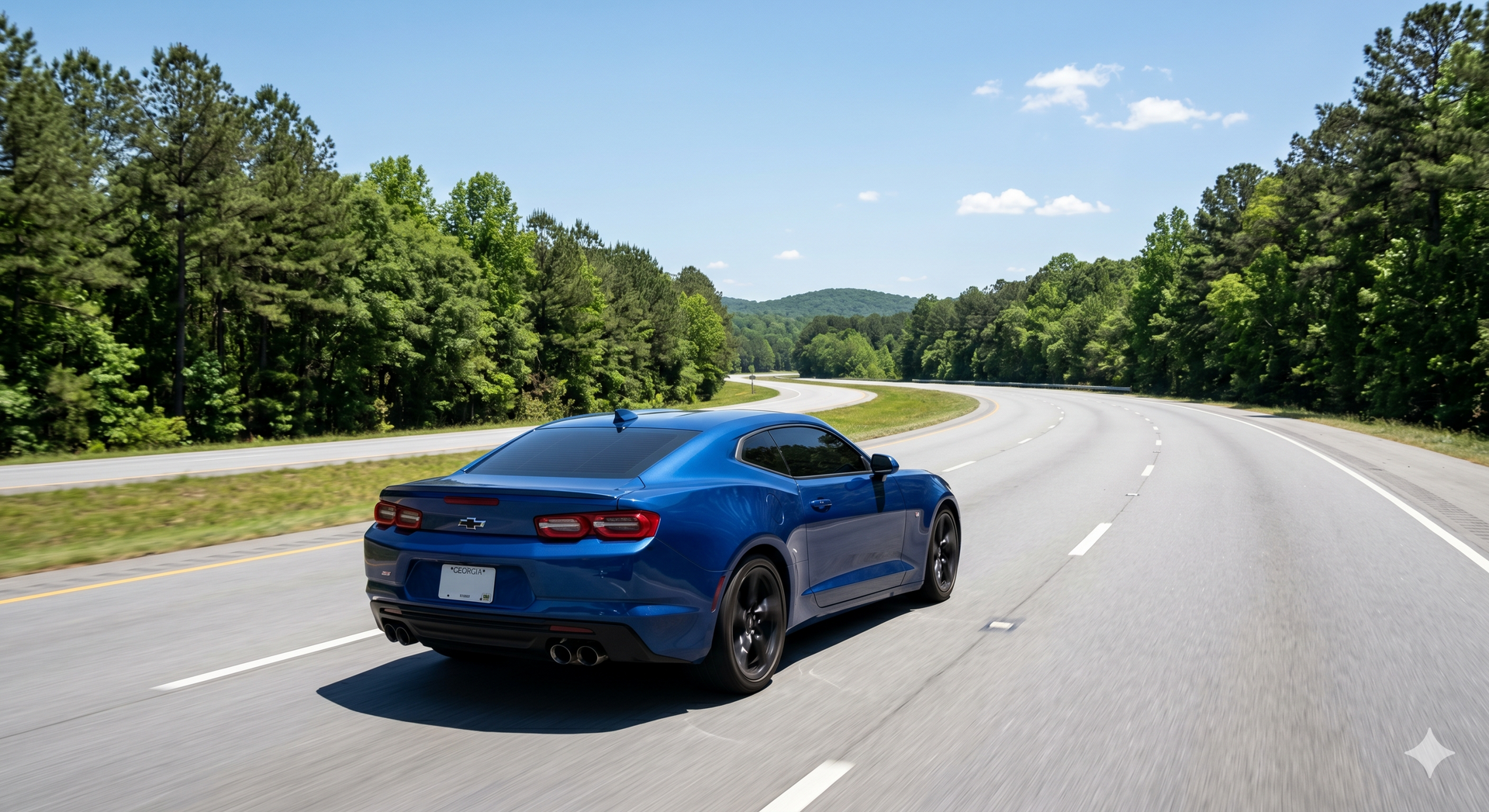
When we turn a corner, the car's weight shifts to the outside wheels. This weight transfer happens because the center of gravity wants to keep moving straight while the tires force the car to turn.
Without a sway bar, the outside suspension compresses while the inside suspension extends. This creates body roll, where the car leans away from the turn. The more the car leans, the less effective the suspension becomes at keeping all tires firmly planted on the road.
The sway bar connects both sides of the suspension together with a metal bar. When the outside wheel pushes up and the inside wheel drops down, the bar resists this uneven movement. This resistance reduces body roll and keeps the car flatter through the turn.
Sway Bar as a Torsion Spring
The sway bar works by twisting along its length. We call this twisting motion torsion, and the bar acts like a spring that resists being twisted.
When both wheels hit a bump at the same time, the bar simply rotates without twisting. This means it doesn't affect normal up-and-down suspension movement over bumps.
But when only one wheel moves, the bar must twist because one end tries to rotate while the other stays still.
The thicker the bar, the more force it takes to twist it. This increases roll stiffness and reduces body roll even more. A thinner bar twists more easily and allows more body roll but gives a softer ride.
Weight Transfer & Tire Contact
The anti-roll bar doesn't stop weight transfer from happening. Weight still shifts to the outside tires during cornering because of the car's center of gravity.
What the stabilizer bar does is control how that weight gets distributed between the front and rear axles. By keeping the car flatter, we maintain better tire contact with the road surface. When tires stay more perpendicular to the road, they grip better and improve handling.
The bar also affects which end of the car loses grip first. A stiffer front sway bar transfers more weight at the front, which can make the front tires slide first. A stiffer rear bar does the opposite. We use this to tune how a car behaves in turns.
Connection to Suspension Components
The sway bar connects to the control arms or struts through the end links. When one wheel hits a bump, the control arm moves up. This movement transfers through the sway bar link to the bar itself.
The bar then twists and pushes down on the opposite wheel's control arm. This connection creates the anti-roll effect we need during cornering. The mounting points must be solid because they handle significant forces.
We mount the bar close to the wheel to get the best leverage. Front and rear suspension systems can both have their own sway bars. The connection points need regular inspection because worn joints reduce performance and create safety issues.
Key Components of a Sway Bar System
A sway bar system includes three main parts that work together to reduce body roll. The bar itself acts as a torsion spring, while bushings hold it in place and end links connect it to the suspension.
Bar Design and Material
The sway bar is a U-shaped metal rod that spans the width of your vehicle. Most sway bars are made from spring steel or hollow steel tubing. The thickness and diameter of the bar determine how much resistance it provides against body roll.
Thicker bars create more resistance and reduce body roll better than thinner ones. We see hollow bars on many modern vehicles because they save weight while still providing good strength. The bar connects to the vehicle's frame or body through mounting points on each side.
Some vehicles use adjustable sway bars that let drivers change the stiffness level. Sport cars often have thicker bars than standard vehicles. The material must be strong enough to twist repeatedly without breaking or losing its spring properties.
Bushings and End Links
Rubber bushings mount the stabilizer bar to the vehicle's frame or subframe. These bushings allow the bar to rotate smoothly when the suspension moves. The bushings also absorb small vibrations and road noise.
Polyurethane bushings are a popular upgrade option. They last longer than rubber and provide more precise handling. However, they can transfer more noise into the cabin.
Sway bar end links connect each end of the bar to the suspension components below. Most end links use ball joints or bushings at both ends. These connections must move freely as the suspension travels up and down. Worn end links create clunking noises and reduce the bar's effectiveness.
Connection to Suspension Components
The sway bar connects to the control arms or struts through the end links. When one wheel hits a bump, the control arm moves up. This movement transfers through the sway bar link to the bar itself.
The bar then twists and pushes down on the opposite wheel's control arm. This connection creates the anti-roll effect we need during cornering. The mounting points must be solid because they handle significant forces.
We mount the bar close to the wheel to get the best leverage. Front and rear suspension systems can both have their own sway bars. The connection points need regular inspection because worn joints reduce performance and create safety issues.
Key Components of a Sway Bar System
A sway bar system includes three main parts that work together to reduce body roll. The bar itself acts as a torsion spring, while bushings hold it in place and end links connect it to the suspension.
Bar Design and Material
The sway bar is a U-shaped metal rod that spans the width of your vehicle. Most sway bars are made from spring steel or hollow steel tubing. The thickness and diameter of the bar determine how much resistance it provides against body roll.
Thicker bars create more resistance and reduce body roll better than thinner ones. We see hollow bars on many modern vehicles because they save weight while still providing good strength. The bar connects to the vehicle's frame or body through mounting points on each side.
Some vehicles use adjustable sway bars that let drivers change the stiffness level. Sport cars often have thicker bars than standard vehicles. The material must be strong enough to twist repeatedly without breaking or losing its spring properties.
Bushings and End Links
Rubber bushings mount the stabilizer bar to the vehicle's frame or subframe. These bushings allow the bar to rotate smoothly when the suspension moves. The bushings also absorb small vibrations and road noise.
Polyurethane bushings are a popular upgrade option. They last longer than rubber and provide more precise handling. However, they can transfer more noise into the cabin.
Sway bar end links connect each end of the bar to the suspension components below. Most end links use ball joints or bushings at both ends. These connections must move freely as the suspension travels up and down. Worn end links create clunking noises and reduce the bar's effectiveness.
Connection to Suspension Components
The sway bar connects to the control arms or struts through the end links. When one wheel hits a bump, the control arm moves up. This movement transfers through the sway bar link to the bar itself.
The bar then twists and pushes down on the opposite wheel's control arm. This connection creates the anti-roll effect we need during cornering. The mounting points must be solid because they handle significant forces.
We mount the bar close to the wheel to get the best leverage. Front and rear suspension systems can both have their own sway bars. The connection points need regular inspection because worn joints reduce performance and create safety issues.
Types of Sway Bars
Sway bars come in different designs and configurations to match various vehicle needs and driving styles. The main differences involve their construction material, adjustability features, and placement on the vehicle.
Solid vs. Hollow Sway Bars
Solid sway bars are made from a single piece of steel throughout their entire diameter. They provide maximum stiffness and resistance to body roll.
Hollow sway bars have an empty center, which reduces weight while still maintaining good performance. A hollow sway bar can weigh 30-40% less than a solid bar of the same diameter. This weight savings helps reduce unsprung mass, which can improve handling response.
The trade-off is that hollow bars are slightly less stiff than solid bars of equal outer diameter. Many manufacturers now offer hollow designs for performance applications where weight matters. Racing teams often prefer hollow bars to shed pounds without giving up too much roll resistance.
Some aftermarket sway bars use a splined design where the bar has ridges or grooves cut into it. A splined sway bar allows for different mounting positions to adjust the stiffness level.
Adjustable and Performance Sway Bars
Adjustable sway bars let drivers change the stiffness setting without replacing the entire bar. These bars have multiple mounting holes on the end links or arms. Moving the connection point closer to the center makes the bar softer, while mounting further out increases stiffness.
Performance sway bars are thicker and stiffer than stock bars. An aftermarket sway bar upgrade can reduce body roll by 20-50% compared to factory equipment. We see these most often on sports cars and modified street vehicles.
A sway bar upgrade typically involves installing bars with larger diameters or better materials. Some drivers use adjustable sway bars to fine-tune their vehicle's balance between understeer and oversteer. Track-focused setups often run very stiff settings, while street cars benefit from moderate adjustments.
Off-road vehicles sometimes use a sway bar disconnect system. This allows drivers to remove the anti-sway bar's effect temporarily for better wheel articulation on rough terrain.
Front and Rear Sway Bars
The front sway bar connects the left and right front suspension components. Most vehicles come with a front bar from the factory because the front end typically needs more roll control during cornering.
A rear sway bar performs the same function at the back of the vehicle. Many economy cars don't include rear bars to save costs, but adding one can improve handling balance.
The relative stiffness between front and rear sway bars affects how a vehicle handles. A stiffer front bar reduces front-end grip and can cause more understeer. A stiffer rear bar reduces rear grip and can lead to oversteer.
We adjust the front-to-rear balance to match driving preferences and vehicle characteristics. Sport sedans often use both front and rear bars sized to create neutral handling. Some performance enthusiasts install only a rear sway bar on front-wheel-drive cars to reduce understeer.
Sway Bar Effects on Handling and Vehicle Dynamics
A sway bar changes how a car corners by controlling body roll and changing weight transfer between the left and right wheels. This affects understeer, oversteer, and how quickly the car responds to steering inputs.
Reducing Understeer and Oversteer
Understeer happens when the front tires lose grip first during a turn, making the car push wide. Oversteer occurs when the rear tires lose grip first, causing the back end to slide out.
We can adjust these behaviors by changing sway bar stiffness. A stiffer front sway bar increases understeer because it transfers more weight to the outside front tire during cornering. This makes the inside front tire carry less load and reduces total front grip.
A stiffer rear sway bar increases oversteer by transferring more weight to the outside rear tire. The inside rear tire loses contact pressure, which reduces rear grip compared to the front.
Many cars come with adjustable sway bars. We can fine-tune the balance by changing the mounting position or replacing bars with different stiffness ratings.
Enhancing Roll Resistance
Roll resistance is how well a car resists leaning to one side during turns. Sway bars add roll stiffness without making the ride harsh like stiff springs would.
When we install a thicker sway bar, the car leans less in corners. The bar physically resists twisting, which limits how far the suspension can compress on one side and extend on the other.
More roll resistance keeps the tires flatter on the road surface. This maintains better tire contact and grip during cornering. The trade-off is that sway bars reduce independent suspension movement, which can hurt traction on bumpy roads.
Race cars often use very stiff sway bars to minimize body roll. Street cars need softer bars to balance cornering performance with comfort over rough pavement.
Handling Balance and Steering Response
Handling balance refers to how neutral a car feels when turning. Perfect balance means the front and rear tires reach their grip limits at the same time.
We adjust this balance through front and rear sway bar stiffness. If a car has too much understeer, we can add a stiffer rear bar or softer front bar. For too much oversteer, we do the opposite.
Steering response is how quickly the car reacts to steering wheel input. Stiffer sway bars make the car respond faster because less body roll means less delay between turning the wheel and the car changing direction.
The front sway bar has the biggest impact on initial turn-in feel. A stiffer front bar makes the car feel more direct and responsive when we first enter a corner.
Recognizing Wear and Failure
We need to check our sway bar components every 12,000 miles or once a year. The most common signs of wear include clunking noises when driving over bumps, excessive body roll in turns, and uneven tire wear.
Sway bar end links fail most often. When they wear out, we'll hear knocking sounds from the front or rear suspension. We can test them by pushing down on the corner of the car and listening for noise.
The rubber bushings also wear down over time. Cracked, torn, or missing bushings let the sway bar move around too much. We should look for:
- Visible cracks in the rubber
- Loose or missing bushing brackets
- Grease or oil leaks around the bushings
- Metal-on-metal contact marks
A worn sway bar link will have play in the ball joint or torn rubber boots. We can grab the link and try to move it by hand to check for looseness.
If you need a knowledgeable team for your vehicle’s maintenance, stop by Interstate Auto Care. We’d be honored to help!
Interstate Auto Care
Address: 526 E. 14 Mile Rd., Madison Heights, MI
Phone:
(248) 206-3962

Written by Bill Nalu
Bill Nalu is the President of Interstate Auto Care in Madison Heights. With over 30 years of experience in the auto repair industry, he and his team serve local drivers in the Greater Detroit area.