Why Your Car's Suspension Is the Unsung Hero of Road Safety
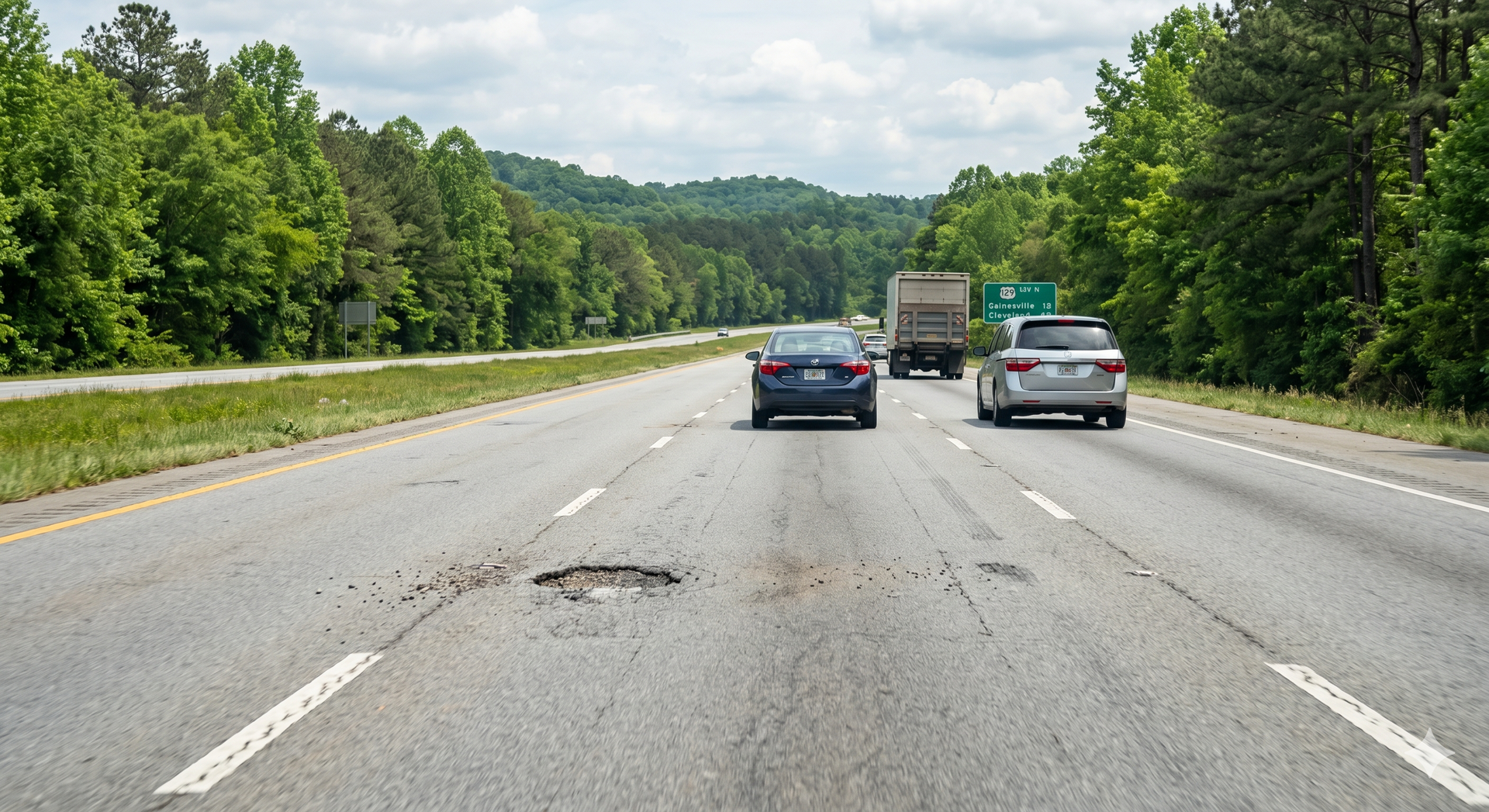
Every driver in Michigan knows the feeling. You hit one of those legendary potholes on I-75 near the State Fairgrounds, your whole car shudders, and you wince as you keep driving. Maybe you check your tires, see nothing obviously wrong, and move on with your day. What most drivers never consider is what just happened to their suspension, and why that matters far more than they realize.
Your suspension system rarely gets the attention it deserves. It does not make noise until something is seriously wrong. It does not trigger a dashboard warning light. It just quietly holds everything together, until it does not. We want to change how drivers think about this system, because understanding it could genuinely save your life.
The Foundation That Every Other Safety System Depends On
Think of your car as a chain. Your brakes, steering, and tires are the links everyone talks about. But your suspension is the anchor point that gives every one of those links something solid to pull against. Remove it from the equation and the whole chain falls apart.
Here is a straightforward way to think about it. Imagine trying to stop a shopping cart that has one broken wheel. You can squeeze the handle as hard as you want, but the cart pulls sideways and takes twice the distance to stop. That broken wheel is the equivalent of a worn shock absorber or a compromised strut. Your brakes may be in perfect condition, but if your suspension cannot keep your tires flush against the road surface, your stopping distance increases dramatically.
The same logic applies to steering. When suspension components like control arm bushings or tie rod ends wear out, your steering inputs become imprecise. You turn the wheel and the car responds a half-second later, or it wanders slightly on the highway. Drivers on Telegraph Road or Woodward Avenue know how quickly traffic conditions can change. That half-second of imprecision is not a small inconvenience. It is the difference between a near miss and a collision.
How Suspension Failure Creates a Cascading Effect
This is what concerns us most when we see a vehicle come in with neglected suspension. The damage rarely stays contained to one system.
Worn shocks and struts allow your tires to bounce and skip across the road surface rather than maintain consistent contact. That uneven contact accelerates tire wear in unpredictable patterns. Now your tires are compromised. Uneven tire wear changes how your vehicle tracks on the road, which puts stress on your wheel bearings and alignment. Poor alignment then stresses your steering components. By the time a driver notices something feels off, they are not dealing with one problem. They are dealing with four or five interconnected problems that developed quietly over time.
We see this pattern regularly with vehicles that come to us after years of driving on roads like 14 Mile or heading out to the airport on I-696. These roads are not gentle. Michigan winters and freeze-thaw cycles punish suspension components in ways that warmer climates simply do not.
What Smart Suspension Maintenance Actually Looks Like
Here is where we want to push back against the old-school thinking around maintenance schedules. The idea that you check your suspension once a year regardless of how or where you drive does not reflect how these components actually age.
Suspension wear is driven by conditions, not the calendar. A driver who commutes daily through Madison Heights on pothole-heavy surface streets is putting far more stress on their components than someone doing mostly highway miles. Mileage matters. Road quality matters. Vehicle weight and load habits matter.
We take a condition-based approach to suspension evaluation. Rather than telling every customer to come back in twelve months, we look at what the components are actually showing us. Bushing degradation, fluid displacement in shocks, play in joints, and tire wear patterns all tell a more honest story than a date on a sticker.
The Bottom Line on Suspension and Safety
Your suspension is not a comfort feature. It is a safety system, and it is the one that makes every other safety system work. Brakes need it. Steering needs it. Your tires need it. When it degrades, nothing on your vehicle performs the way it was designed to.
We encourage every driver in the Madison Heights area to stop thinking about suspension as something to fix when it breaks. Think of it as something to monitor because everything else depends on it.
Contact Us
Address:
526 E 14 Mile Rd, Madison Heights, MI 48071
Phone:
(248) 206-3968
Hours: Mon-Fri 8:00 AM to 5:00 PM